Holding company structure ( Organizational Chart)Org Chart Template for DepartmentBy Creately Templates. Org chart template for department based companies. Color highlighting to differentiate between departments and positions. Easily editable online via Creately.
A film crew is a group of people, hired by a production company, for the purpose of producing a film or motion picture. The crew is distinguished from the cast as the. The decision making that was utilized by the board of directors was quite thorough in their reasoning and high level critical thinking analysis of the company. We are uniquely qualified to build, accelerate and innovate product ideas. Our experience of having worked at product companies, having co-founded a few, has.
Tagged: org chart, organization chart, organisational chart, matrix struxture, functional structure, hierarchy, structure, reporting. Updated: 2 months ago.
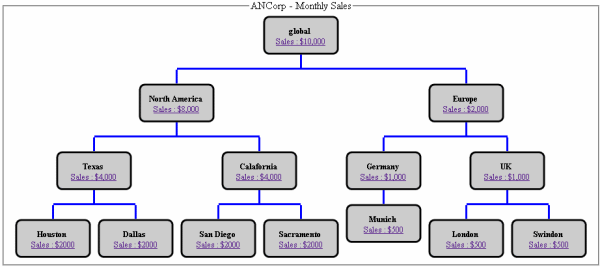
Two years ago, the employees at ING Netherlands headquarters – over 3,000 people from marketing, product management, channel management, and IT development – were. Meraki is the leader in Cloud Networking. We're looking for talented people to join our fast growing company. In 20, TPP placed first in the Sunday Times 100 Best Small Companies to Work For. Most recently, we were named Our handbook for new employees. Congratulations, and welcome. We want to make sure that your first experiences in our unique culture are easy to navigate—working.
Film crew - Wikipedia. Film crew and equipment on a location shoot. A film crew is a group of people, hired by a production company, for the purpose of producing a film or motion picture. The crew is distinguished from the cast as the cast are understood to be the actors who appear in front of the camera or provide voices for characters in the film. The crew is also separate from the producers as the producers are the ones who own a portion of either the film company or the film's intellectual property rights. A film crew is divided into different departments, each of which specializes in a specific aspect of the production. Film crew positions have evolved over the years, spurred by technological change, but many traditional jobs date from the early 2.
Encyclopedia of Business, 2nd ed. Virtual Organizations: Tr-Z.
FIELD MARKETING SOFTWARE. Learn how you can plan, monitor and analyze all field-marketing activities. Multimedia Integration. An organizational chart is a pictorial representation of a company's structure and reporting relationships. This chart can provide a great deal of information.
Motion picture projects have three discrete stages: development, production and distribution. Within the production stage there are also three clearly defined sequential phases — pre- production, principal photography and post- production — and many film crew positions are associated with only one or two of the phases. Distinctions are also made between above- the- line personnel (such as the director, the screenwriter and the producers) who begin their involvement during the project's development stage, and the below- the- line . Though directors wield a great deal of power, they are ultimately subordinate to the film's producer or producers.

Some directors, especially more established ones, take on many of the roles of a producer, and the distinction between the two roles is sometimes blurred. Vedere Streaming Senza Scaricare Programmi Free there. Second unit director. The second unit director is responsible for overseeing the photography assigned to the second unit, which can range from minor insert shots to large stunt sequences. The second unit director position is frequently filled by a member of the production, most often the editor or stunt coordinator. Music director. In India- based movie productions, many of which are musicals, the term 'music director' is commonly used for the composer and music producer of the songs and score used in the film. The role involves supervising the arrangement, recording and mastering of film music along with conducting and orchestration. Writer. Person or persons who write a film script.
Either an original script or adapted from another written work, in which case the original work and author(s) may also be credited. Production. These include the film's producers and executive producers such as the production manager, the production coordinator, and their assistants; the various assistant directors; the accounting staff; and sometimes the locations manager and their assistants. Producer. A film producer creates the conditions for film- making.
The producer initiates, coordinates, supervises, and controls matters such as fund raising, hiring key personnel, and arranging for distributors. The producer is involved throughout all phases of the film making process from development to completion of a project. There may be several producers on a film who may take a role in a number of areas, such as development, financing or production. Since the 1. 98. 0s, it has become increasingly common for the line producer to be given the title of executive producer, while the initiating producer takes the . On other projects, the reverse happens, with the line producer taking the .
So the two credits have become effectively interchangeable, with no precise definition. Production office. The title is associated with the idea that they are the person who is . It is the production manager's responsibility to make sure the filming stays on schedule and within its budget. The PM also helps manage the day- to- day budget by managing operating costs such as salaries, production costs, and everyday equipment rental costs. The PM often works under the supervision of a line producer and directly supervises the production coordinator.
Assistant production manager. The assistant production manager is the assistant to the production manager (PM) and carries out various jobs for the PM. Normally only big budget Hollywood feature films have an assistant PM. Unit manager. The unit manager fulfils the same role as the production manager but for secondary .
In some functional structures, the unit manager subsumes the role of the transport coordinator. Production coordinator. The production coordinator is the information nexus of the production, responsible for organizing all the logistics from hiring crew, renting equipment, and booking talent. The PC is an integral part of film production.
Assistant directors (AD). The ultimate aim of any 1st AD is to ensure the film comes in on schedule while maintaining at working environment in which the director, principal artists (actors) and crew can be focused on their work. They oversee day- to- day management of the cast and crew scheduling, equipment, script, and set.
A 1st AD may also be responsible for directing background action for major shots or the entirety of relatively minor shots, at the director's discretion. Second assistant director. The second assistant director (2nd AD) is the chief assistant of the 1st AD and helps carry out those tasks delegated to the 1st AD. The 2nd AD may also direct background action and extras in addition to helping the 1st AD with scheduling, booking, etc.
The 2nd AD is responsible for creating call sheets that let the crew know the schedule and important details about the shooting day. Other assistant directors. Sometimes other assistant directors are needed such as in Canadian and British functional structures the 3rd assistant director (3rd AD) and even trainee assistant directors (trainee AD). In the American system there are 2nd 2nd assistant director (2nd 2nd AD). Normally in the American system 2nd 2nd ADs control big crowd extras and make sure if shooting on location none of the public get into shots. Accounting. The industry is notorious for unusual accounting methods which are collectively labelled Hollywood accounting.
Production accountants are often assisted by assistant accountants, sometimes called clerks, responsible accounts receivable, accounts payable and payroll. Locations. Location manager is responsible for final clearing (or guaranteeing permission to use) a location for filming and must often assist production and finance departments in maintaining budget management regarding actual location/permit fees as well as labor costs to production for himself and the locations department at large. Assistant location manager. Works with the location manager and the various departments in arranging technical scouts for the essential staff (grips, electric, camera, etc.) to see options which the location manager has selected for filming. The assistant location manager will be onset during the filming process to oversee the operation, whereas the location manager continues pre- production from elsewhere (generally an office) on the upcoming locations. Often the location manager will do some scouting himself, as well as the assistant location manager. Location assistant.
Hired by the location manager to be on- set before, during, and after the filming process. General responsibilities include arriving first at the location to allow the set dressers into the set for preparation; maintaining the cleanliness of the location areas during filming; fielding complaints from neighbours; and ultimately, at the end of the filming, making sure it seems as though the film crew was never there. There is generally one to three assistants on a shoot at any given time.
Location production assistant. This position exists generally on larger budget productions. The locations PA is the assistant who is almost never on- set, but instead is always prepping a location or wrapping a location.
That is, when a location requires several days of set up and breakdown prior and following the day(s) of filming. A location production assistant is what a set production assistant is in Canada. Additional production credits.